
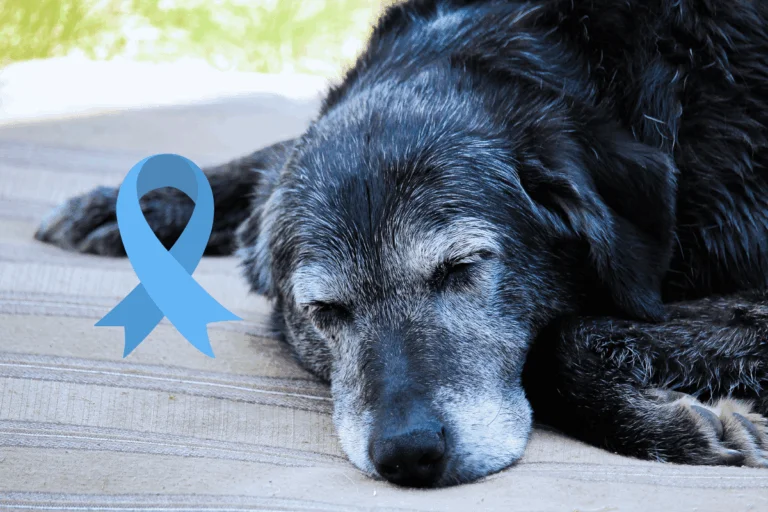
November is coming and with it awareness of prostate cancer, which affects not only us humans, but also lions and dogs, especially older dogs, commonly diagnosed after the age of 9. Prostate cancer in dogs is usually aggressive and, when diagnosed late, has serious consequences for the pet's health.
It's therefore very important to take your dog to the vet for regular check-ups, even when it's young, to avoid unpleasant surprises and to monitor your dog's health with the specialist.
What is prostate cancer?
Prostate cancer is a tumor that develops in the prostate gland, located next to the dog's bladder and rectum. This gland is part of the male reproductive system and, with advancing age, can undergo different changes.
Prostate cancer is not very common in dogs, but when it does appear it is usually more aggressive than in humans. This means that it can grow rapidly and spread to other parts of the body, such as the bones, lungs and lymph nodes.
The problem is more common in elderly male dogs, usually from the age of 9. However, it can also occur in younger dogs, especially if there is a genetic predisposition.
The big challenge is that, in many cases, the initial signs are subtle or confused with other prostate diseases, such as benign prostatic hyperplasia (BPH) or infections (prostatitis). For this reason, the diagnosis is usually made in more advanced stages, when treatment is already more difficult and the dog's life expectancy may be reduced.
Can neutered dogs get prostate cancer?
Yes, castration helps prevent problems such as benign prostatic hyperplasia (BPH) and infections, but it doesn't completely eliminate the risk of prostate cancer.
Even neutered dogs can develop the disease, although less frequently. That's why routine examinations are important for all elderly dogs.
What are the symptoms of prostate cancer in dogs?
In the early stages, the signs can be subtle. As the disease progresses, the most common symptoms include:
- Difficulty urinating or straining without much result
- Presence of blood in the urine or discharge from the penis
- Urinary infections that come back frequently
- Difficulty defecating, with flat "ribbon-like" stools
- Loss of weight and appetite
- Abdominal pain and difficulty walking in advanced cases
These symptoms can also appear in other prostate diseases, such as BPH or prostatitis. That's why a vet's assessment is essential.
How is the diagnosis made?
In dogs there are still no specific blood markers for prostate cancer, as there are in humans with the PSA (Prostate Specific Antigen). In dogs, observation of clinical signs, combined with physical examination and imaging tests, can enable an earlier diagnosis.
The vet can use different tools to identify changes in the prostate:
- Clinical examination (rectal touch) to assess size and consistency
- Ultrasound of the abdomen to visualize the prostate
- X-ray to check for metastasis to bones or lungs
- Urine laboratory tests to detect blood or infections
- Biopsy to confirm the cancer and define the type of tumor
The earlier the diagnosis is made, the better the chances of controlling the disease. That's why, from the age of six, it's recommended to take your puppy to the vet to check for the development of this pathology.
What should I do if my dog has prostate cancer?
Treatment will depend on the stage of the disease and the pet's health conditions. Options include:
- Surgery to remove the prostate, indicated in some cases
- Radiotherapy or chemotherapy, when available in specialized centers
- Medications (such as anti-inflammatory drugs) to relieve symptoms and slow down progression
- Palliative care, when the disease is already advanced, focusing on the animal's comfort
Unfortunately, a complete cure is rare. The aim is usually to improve quality of life and prolong the pet's time with the family.
What is the life expectancy of a dog with prostate cancer?
Life expectancy varies according to the stage at which the disease is discovered. On average:
- Late diagnosis: around 6 months
- Early diagnosis and aggressive treatment: up to 1 year or more
Each case is unique, so veterinary care is essential to adjust the treatment and ensure the dog's well-being.
Benign prostatic hyperplasia (BPH) and prostate cancer
Benign prostatic hyperplasia (BPH) is very common in uncastrated and elderly male dogs. In this condition, the prostate increases in size due to the action of hormones, but it is not cancer.
The symptoms can be similar: difficulty urinating, flat stools and even the presence of blood. The difference is that in BPH, the growth is benign and can be treated with medication or castration, which causes the prostate to regress naturally.
In prostate cancer, the cells grow uncontrollably and can spread to other organs (metastasize). For this reason, a correct diagnosis is essential to differentiate between the two conditions.
Bacterial prostatitis
Prostatitis is an inflammation of the prostate caused by bacteria, usually associated with urinary infections or BPH itself.
Signs include fever, abdominal pain, difficulty urinating, walking and even purulent discharge in the urine.
It's a serious problem, but it's different from cancer: it's an infection, which requires long-term antibiotics and, in some cases, castration to prevent recurrences.
Because the symptoms are similar to those of cancer and BPH, only veterinary examinations can clearly differentiate between them.
Frequently Asked Questions
What are the first signs of prostate cancer in dogs?
Difficulty urinating and flat stools are some of the first signs that may appear.
What to do with a dog with prostate cancer?
Take your pet to the vet immediately. He will recommend the best treatment to give your pet comfort and quality of life.
How much does the treatment cost?
The cost can vary greatly: surgery and radiotherapy are expensive, while drug treatments and palliative care can be more affordable. Talk to your vet about the best approach.
Which race has more prostate cancer?
Some breeds seem to be more predisposed, such as:
- Flanders drover
- Doberman
- Shetland Shepherd
- Scottish Terrier
- Beagle
- Miniature Poodle
- German Shorthaired Pointer
- Airedale Terrier
- Norwegian Elkhound
This doesn't mean that all dogs of these breeds will have the disease, but it does indicate that veterinary monitoring should be even more attentive - especially in elderly male dogs.