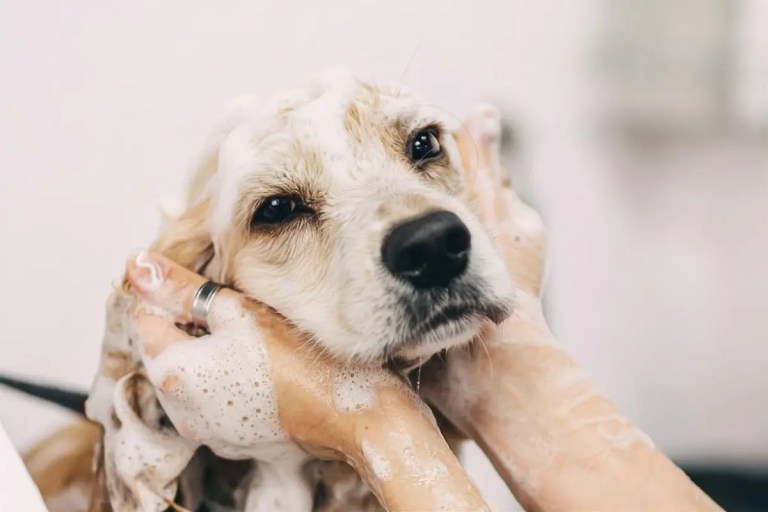
Bathing an older dog requires more care than bathing a younger dog.
As the years go by, the body changes. The skin becomes more sensitive, mobility decreases, and body temperature regulation is no longer the same.
That’s why something as simple as a bath can become an uncomfortable experience. It can even be dangerous if not done properly.
The good news is that, with a few adjustments, you can keep your dog clean safely and with peace of mind.
How to Safely Bathe an Elderly Dog
Bathing older dogs requires more planning and care.
Before you begin, think about the process as a whole, not just the cleaning.
A few simple precautions can make all the difference:
- Get everything ready before you begin;
- Use lukewarm water, never hot or cold;
- Avoid slippery surfaces;
- Use mild products designed specifically for dogs;
- Dry yourself thoroughly after your shower.
These tips may seem simple, but they help prevent common problems such as falls, stress, and even hypothermia.
Why does bathing an elderly dog require more care?
Aging brings about significant changes in an animal's body.
The skin, for example, tends to become thinner and less protected. This increases the risk of irritation and dryness.
In addition, many older dogs suffer from joint pain.
Standing for long periods of time, especially on a slippery surface, can be uncomfortable or even painful.
Another important point is thermal control.
Older dogs have a harder time maintaining a stable body temperature. This means that bathing them in water that is too cold or too hot can cause them to get too cold or feel uncomfortable.

How often should you bathe an elderly dog?
There is no one-size-fits-all rule.
The ideal frequency depends on several factors, such as:
- Coat type;
- Health conditions;
- Activity level;
- Presence of skin conditions.
In general, bathing too often can damage the skin’s natural barrier.
On the other hand, very long intervals can lead to dirt buildup and infections.
The best approach is to find a balance—and, whenever possible, adjust it based on your veterinarian’s advice.
Pet Shop Bath
Taking an elderly dog to the pet store also requires care.
Travel, contact with other animals, and noisy environments can cause higher-than-expected levels of stress, especially in more sensitive dogs or those with physical limitations.
Whenever possible, choose quieter times to avoid waiting.
Transportation should be safe and comfortable, and ideally, you should choose a place where the dog is already familiar with the staff.
Another option is to opt for in-home grooming services, which significantly reduce stress by keeping the pet in a familiar environment with fewer distractions and more predictability.
When Not to Bathe an Older Dog
There are situations in which bathing should be avoided or postponed.
This is important because, in such cases, the risks may outweigh the benefits.
Avoid bathing your dog if it is:
- Very weak
- Recovering from surgery
- With severe pain or difficulty moving
- On very cold days, without heating
In such situations, hygiene measures should be taken using alternative methods.
How to clean an elderly dog that can't take a bath
When a traditional bath isn't possible, there are other ways to maintain hygiene.
These alternatives are especially useful for dogs with limited mobility or advanced medical conditions.
You can use:
- Wipes specifically designed for pets;
- Dry cleaning products;
- Spot cleaning (paws, genital area, muzzle);
- Frequent brushing.
Brushing not only helps with cleaning, but also promotes circulation and aids in the early detection of skin changes.
Signs that bathing is causing stress or posing a risk
Not all discomfort is obvious.
Older dogs may show subtle signs that something is wrong.
During or after bathing, note the following:
- Tremors;
- Rapid breathing;
- Difficulty standing;
- Unusual resilience;
- Lethargy after a bath.
These signs suggest that the process may be more stressful than it should be.
In such cases, it’s worth reevaluating how the bath is being given.
Can bathing be dangerous for older dogs?
Yes, it can, but not because of the bath itself.
The risk lies in the way it is carried out.
The main problems associated with this are:
- Falls on slippery surfaces;
- Exposure to cold;
- Spending too much time standing;
- Physical stress.
A quick, safe, and adapted bath tends to be well tolerated.
On the other hand, a long bath taken without proper facilities or preparation can cause significant discomfort.
Tips for making bath time more comfortable
Small adjustments make a big difference in a dog’s experience.
Creating a more predictable and peaceful environment helps reduce stress.
Some simple strategies include:
- Keep the room quiet;
- Avoid rushing through the process;
- Provide physical support to the animal;
- Shorten shower time;
- Use non-slip mats.
Over time, bath time can become a more relaxing experience for both the owner and the dog.
The Importance of Hygiene for the Longevity of Senior Dogs
Hygiene is about more than just appearance.
It is directly linked to the animal's health.
Keeping your skin clean helps prevent infections, irritation, and the buildup of dirt.
In addition, bath time can be an important opportunity to examine your dog’s body.
During this interaction, it is possible to identify:
- Lumps;
- Skin changes;
- Wounds;
- Sensitivity to touch.
This kind of observation is essential in the senior years.
To provide even better care, it’s worth learning more about caring for senior dogs.
Is your dog getting older? Your care routine needs to evolve along with it.
As your dog gets older, subtle changes—such as sensitivity during baths, reduced mobility, or changes in the skin—become important indicators of your dog’s health.
PetMoreTime uses continuous, data-driven monitoring to help pet owners and veterinarians better understand the aging process and anticipate risks.
Rather than simply reacting to symptoms, the goal is to monitor health over time.
Learn about PetMoreTime and see how our care program for senior dogs works.