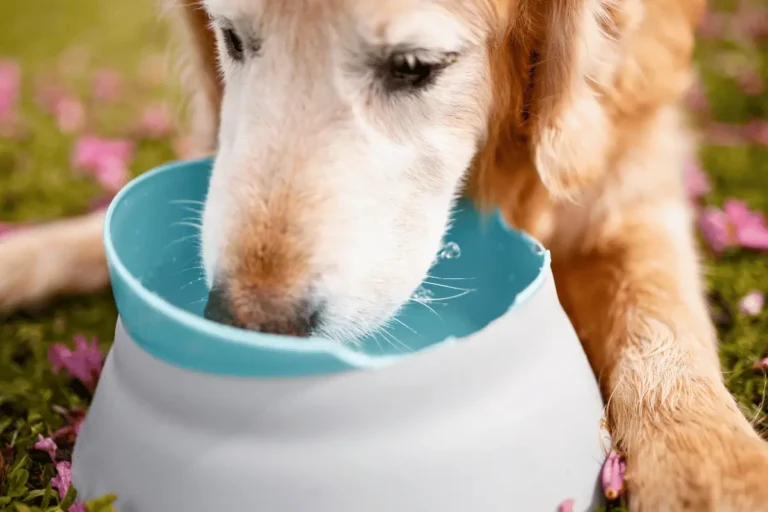
When a dog reaches old age, many behaviors begin to change. Their pace slows down, they sleep more, their appetite may fluctuate, and one sign that often catches the attention of owners is when older dogs start drinking a lot of water.
At first glance, this may seem like a natural part of aging. However, excessive water intake, medically known as polydipsia, should not be ignored.
In older dogs, this behavior may be related to physiological changes, but it may also indicate silent diseases.
Is it normal for an elderly dog to drink a lot of water?
It depends. Small variations in water intake can occur throughout a dog's life, including in old age.
Climate change, rising temperatures, physical activity, or even diet can influence how much an animal drinks throughout the day.
However, a persistent and progressive increase in water consumption is not considered normal, especially in older dogs.
Aging alone does not cause significant polydipsia.
Water intake is considered excessive (polydipsia) when it exceeds approximately 100 mL/kg per day in dogs.
When the guardian notices that the water bowl empties too quickly or needs to be refilled several times a day, this should be seen as a warning sign.
What does it mean when an elderly dog drinks a lot of water?
Most of the time, drinking too much water is the body's response to some internal imbalance.
The dog's body tries to compensate for metabolic, hormonal, or organic changes by increasing fluid intake.
This mechanism may be related to:
- Difficulty of the kidneys in concentrating urine
- Excess glucose or hormones in the blood
- Inflammatory or infectious processes
- Use of certain medications
- Metabolic changes associated with aging
It is important to note that excessive thirst rarely occurs on its own. It is usually accompanied by other signs that help guide the investigation.

Why does my elderly dog drink a lot of water and urinate frequently?
When increased water intake is accompanied by excessive urination, we are faced with a condition known as polyuria and polydipsia. This set of signs is extremely common in endocrine and kidney diseases.
The reasoning is simple: if the body cannot retain fluids properly, the dog urinates more and, to compensate for this loss, starts drinking more water.
This pattern is one of the main reasons for veterinary consultation in older dogs and should never be underestimated.
What is the ideal daily amount of water for an older dog?
In general, a healthy older dog usually drinks between 40 and 60 ml of water per kilogram of body weight per day. This value is used as a clinical reference by veterinarians to assess whether consumption is within the expected range.
In practice, this means that a dog weighing 15 kg, for example, tends to consume around 600 to 900 ml of water per day. A larger dog, weighing 25 kg, can easily consume 1.2 to 1.5 liters per day.
It is important to emphasize that these figures are estimates.
Water consumption may vary depending on factors such as ambient temperature, level of physical activity, type of food (dry or wet food), and individual health conditions.
What really deserves attention is when the owner notices that the dog starts drinking much more water than usual, persistently, without any clear changes in the weather or routine.
Main diseases that cause older dogs to drink a lot of water
Chronic kidney disease
Chronic kidney disease is one of the most common causes of excessive thirst in older dogs. Over time, the kidneys lose their ability to filter blood and concentrate urine properly.
This is a progressive and silent disease, which can take months or years to show clear signs.
As a result, the dog begins to:
- Urination in greater volume;
- Feeling thirstier;
- Lose weight;
- Display apathy;
- Experiencing nausea or vomiting;
- Develop characteristic bad breath.
Diabetes mellitus
Diabetes is also a major cause of polydipsia in older dogs. Excess glucose in the blood causes the body to try to eliminate it through urine, drawing large amounts of water along with it.
Early diagnosis makes all the difference in controlling the disease.
In addition to drinking lots of water and urinating frequently, the dog may exhibit:
- Increased appetite;
- Weight loss;
- Weakness;
- Rapidly developing cataract.
Cushing's syndrome
Cushing's syndrome (hyperadrenocorticism) occurs when there is excessive production of cortisol. One of the most classic signs of this disease is precisely increased thirst and urination.
Other common signs include:
- Increased abdominal volume;
- Bilateral hair loss;
- Thinner skin;
- Muscle weakness;
- Recurrent infections.
It is a common condition in older dogs and requires ongoing monitoring.
Urinary tract infections
Urinary tract infections are more common in older dogs, especially females and animals with other underlying diseases. Even when they do not cause obvious pain, they can cause:
- Increased water intake;
- Increased urinary frequency with or without pain when urinating;
- Urine with a stronger odor;
- The dog begins to urinate outside of its usual places.
In some cases, the infection becomes recurrent and is associated with other systemic diseases.
Liver diseases
Changes in the liver can also interfere with fluid metabolism and lead to increased thirst. In older dogs, liver disease often develops silently.
They may be associated with:
- Vomiting;
- Diarrhea;
- Loss of appetite;
- Jaundice (yellowing of the eyes and mucous membranes);
- Behavioral changes.
Dog drinking lots of water and vomiting: should I be concerned?
Yes. When excessive thirst and vomiting occur together, the condition warrants immediate attention.
This combination may indicate more advanced kidney failure, significant metabolic imbalances, or accumulation of toxins in the body.
In such cases, it is not recommended to wait and see if it improves on its own. A veterinary evaluation should be performed as soon as possible.
Elderly dog drinking lots of water after surgery: is this normal?
After surgery, especially in older dogs, it is common to see a temporary increase in water intake. This may be due to anesthesia, surgical stress, or the use of medications such as corticosteroids and anti-inflammatories.
However, this increase should be temporary.
If excessive thirst persists for several days or weeks after surgery, it is essential to investigate other causes.
How much water is considered "too much" for an elderly dog?
In general, a healthy dog consumes between 40 and 60 ml of water per kilogram of body weight per day. Values consistently above this, without clear explanation, should be evaluated.
A practical tip for the guardian is to measure daily water consumption for a few days, noting down the values. This information is extremely useful during the veterinary consultation.
When should the guardian be concerned and seek veterinary care?
Seek professional evaluation if your senior dog exhibits:
- Persistent increase in water intake;
- Excessive urination or frequent inability to hold urine;
- Urination in unusual places;
- Vomiting;
- Apathy;
- Weight loss;
- Changes in appetite;
- Behavioral changes.
The sooner the cause is identified, the better the prognosis.
How is the diagnosis made?
The diagnosis involves analyzing a set of clinical signs and complementary tests, such as blood tests (to assess kidney and liver function, glucose levels, and certain hormones), urine tests, abdominal ultrasounds, and specific tests based on clinical suspicion.
In older dogs, monitoring over time is just as important as a one-time exam.
PetMoreTime Longevity Program
Changes such as excessive thirst rarely occur in isolation. They are part of a set of signs that indicate how a dog's body is aging.
The PetMoreTime Longevity Program combines technology, continuous monitoring, and scientific knowledge to identify early changes, support preventive decisions, and extend the healthy lifespan of your best friend.