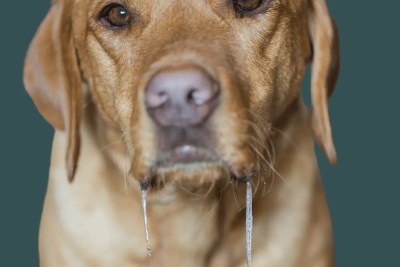
Cushing's disease, also known as Cushing's syndrome or hyperadrenocorticism, is a serious condition that can profoundly affect the health and well-being of our four-legged friends. It is caused by an excess of cortisol in the dog's body, an important hormone, but one that in large quantities can cause various problems.
What is Cushing's disease in dogs?
Cushing's disease occurs when a dog's body produces too much cortisol.
Cortisol is a hormone linked to stress, which regulates various functions in the body, such as metabolism, the immune system and blood pressure. When it is dysregulated, it can lead to a variety of serious symptoms.

Symptoms of the disease
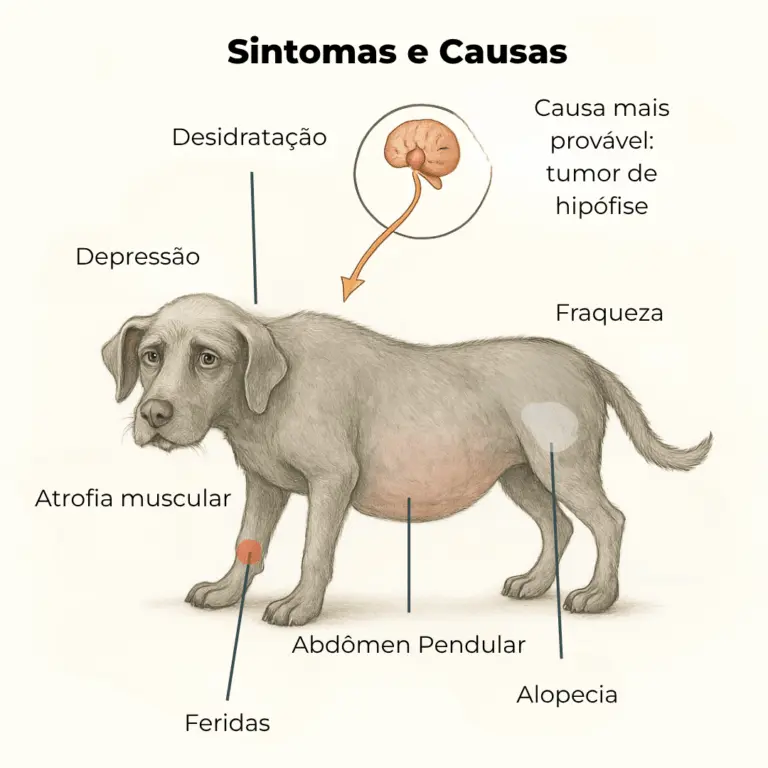
Symptoms usually appear slowly and subtly, but over time they become more obvious:
- Excessive thirst and urination;
- Excessive hunger;
- Swollen and pendulous belly;
- Bulging chest;
- Hair loss and thin skin;
- Lethargy and muscle weakness;
- Recurrent infections (skin, ears, urine);
- Wheezing even at rest;
- Altered behavior (irritability or apathy).
If your dog shows two or more of these signs, see a vet.
Causes of Cushing's disease in dogs
The most common causes include
- Tumor in the pituitary gland(80% of cases);
- Tumors in the adrenal glands(15% of cases);
- Prolonged use of corticosteroids, leading to iatrogenic Cushing's.
In general, tumors are benign, but they still cause significant hormonal dysregulation.
Breeds with a higher predisposition
Some breeds are more likely to develop the disease:
- Small and medium-sized dogs in general.
- Dogs over the age of 6 are also more prone.
Ver raças predispostas
How is the diagnosis made?
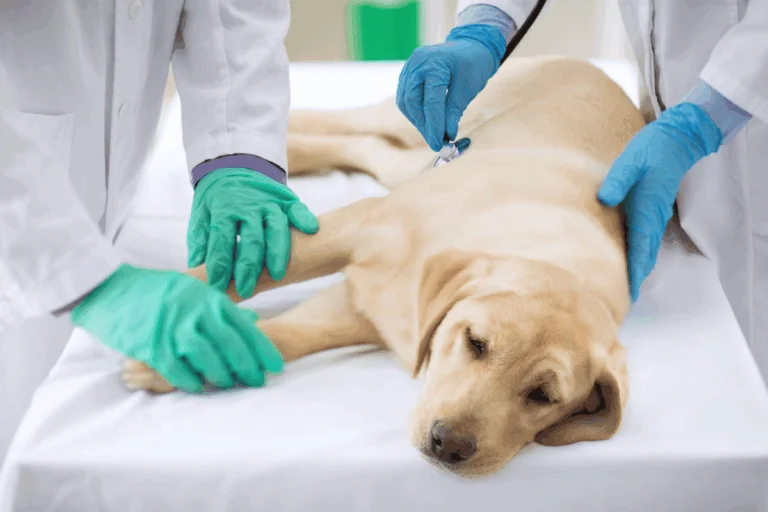
The vet will carry out clinical and laboratory tests:
- Hormone tests (cortisol, ACTH) - 7-hormone panel test if occult cushing is suspected
- Blood and urine tests;
- Abdominal ultrasound;
- Magnetic resonance imaging or tomography in more complex cases.
Treatments for Cushing's disease in dogs
Drug treatment
This is the most common treatment, using drugs such as trilostane or mitotane, which control the production of cortisol. Treatment is usually lifelong and requires frequent monitoring.
Surgery
It is mainly indicated in cases of localized adrenal tumours. Surgery can cure the dog, but it is delicate and only carried out in specialized centers.
Care for iatrogenic Cushing's
It involves gradually reducing or stopping the use of corticosteroids, always with veterinary advice.
Daily care
- Follow the treatment correctly;
- Give balanced food and control your weight;
- Encourage light and regular exercise;
- Keep fresh water on hand at all times;
- Take care of the skin and coat; - omega 3 helps a lot with coat health
- Ensure a calm and stress-free environment;
- Visit the vet regularly.
Life expectancy of a dog with Cushing's
With proper treatment, many dogs live well for 2 to 4 years after diagnosis.
Some live as long as they would without the disease, especially if control is effective.
Risks and complications if left untreated
Without treatment, the disease can cause
- Diabetes;
- Hypertension;
- Serious infections;
- Thrombi;
- Hepatic or renal insufficiency;
- Neurological problems;
- Risk of death.
Frequently asked questions
What are the main symptoms?
Increased thirst and hunger, hair loss, swollen belly, frequent urination, weakness and behavioral changes.
How long does a dog with Cushing's live?
About 2 to 4 years after diagnosis, but can live longer if well treated, depending on the dog's condition.
Can it be cured?
It depends. In cases of successfully removed adrenal tumors, there may be a cure. In others, treatment is for control.
Do dogs with Cushing's suffer?
Unfortunately, this will depend on the dog's condition and the severity of the symptoms. With proper treatment, quality of life can be very good.
How to prevent Cushing's disease in dogs
Unfortunately, there is no guaranteed way to prevent all types of Cushing's disease, as it is often related to genetic factors or natural ageing.
However, some attitudes can help reduce the risk or encourage an early diagnosis:
- Avoid prolonged use of corticosteroids without veterinary supervision;
- Keep routine check-ups up to date, especially for elderly dogs;
- Offer a balanced diet and control your dog's weight;
- Observe changes in the pet's behavior or physical appearance;
- Encourage regular physical activity, respecting the limits of age and health;
- Choose good breeders, in the case of predisposed breeds, who carry out genetic control.
Cushing's disease is serious, but with veterinary supervision and the right care, you can offer your dog a happy life.
If you notice symptoms, seek specialist help as soon as possible. The guardian's love and dedication make all the difference!