
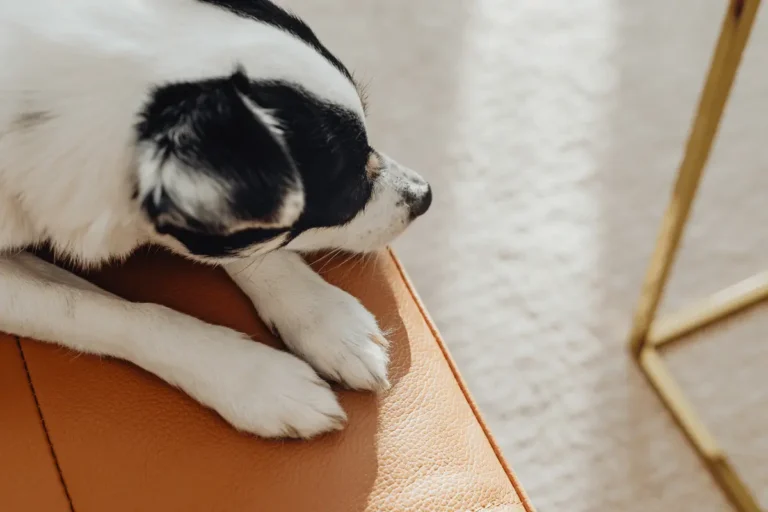
You get ready to go out, grab your keys, close the door... and on the other side, the show of barking, howling, and crying begins.
Many people think it's "cute" or believe it's just a trick, but it's not normal or ideal for a dog to become distressed every time it is left alone.
When this happens frequently, it may be separation anxiety in dogs, a real disorder that causes physical and emotional suffering in the animal and disrupts the family's routine.
Rita Zuanaze, a veterinarian at PetMoreTime and geriatrician, points out that "dogs with separation anxiety are, deep down, dogs that miss their owner or the human they choose as their source of security."
"It's not just that they miss having 'company.' Even when surrounded by other pets, they often remain anxious during separation."
What is separation anxiety in dogs?
Separation anxiety is a condition in which the dog cannot cope with the absence of its owner, experiencing intense stress whenever it has to be left alone, even for a few minutes.
This disorder can appear at any age and usually arises when:
- The guardian changes the routine (such as starting to work outside the home);
- The dog undergoes a change of environment or family;
- The animal is very emotionally dependent;
- There is a lack of socialization and moments of independence.
- Insecurity in dogs that begin to show cognitive disorders, especially in older dogs
Remember that your dog is not "acting up." He genuinely feels fear and insecurity when he is not with you.
Most common symptoms of separation anxiety
The intensity varies from dog to dog, but some signs are very characteristic:
- Continuous barking, crying, and howling after the guardian leaves;
- Destruction of doors, sofas, furniture, or personal belongings;
- Peeing and pooping in inappropriate places, even in dogs that were already trained;
- Excessive salivation, restlessness, and tremors;
- Walking around the house nonstop, as if searching for the guardian;
- Refusing water and food when alone;
- Licking or biting their own paws, which can cause wounds;
- Following the tutor around the house all the time, unable to relax.
When more than two of these signs are repeated frequently, it is a strong indication of separation anxiety.
My dog cries when he is alone: does this always mean anxiety?
Crying when left alone may be separation anxiety, but it is not the only possibility.
Some dogs cry when:
- They are bored and unmotivated;
- They feel pain or discomfort;
- They are afraid of loud noises (fireworks, thunder, cars);
- They were never conditioned to be alone.
The difference is the intensity pattern: in separation anxiety, crying turns into despair, and the behavior tends to escalate quickly.
Consequences of separation anxiety in dogs
In addition to emotional distress, separation anxiety can result in:
For the dog
- Increased cortisol (stress hormone);
- Decreased immunity;
- Skin wounds caused by compulsive licking;
- Weight loss;
- Risk of accidents while attempting to escape.
For the family
- Complaints from neighbors;
- Property damage (doors, furniture, objects);
- Guilt and emotional exhaustion of the guardian.
This combination means that separation anxiety should never be ignored.
How to help a dog with separation anxiety
Management requires consistency, calmness, and changes in routine. Here are the strategies that bring the best results:
1. Make entering and leaving the house something neutral
The more attention you draw to the ritual of leaving or arriving, the more the dog associates these situations with excitement and anxiety.
- Do not throw parties when you leave or return.
- Wait a few minutes before responding.
- Act as if it were commonplace, because it is.
2. Practice gradual absences
Teach the dog to tolerate short distances before moving on to longer ones.
- Start by going out for 30 seconds.
- Increase to 1 minute, then 3, 5, 10...
- Come back before the dog panics.
This training builds a sense of security in your dog that you will always come back.
3. Environmental enrichment is mandatory
A busy mind works in the dog's favor:
- Food toys;
- Lick-lick rugs;
- Hide treats around the house;
- Recreational bones and activities that require focus.
A dog that has something to do suffers less when it is alone.
4. Burn off energy before going out
Walks, search games, and short training sessions help to:
- Reduce anxiety;
- Improve mood;
- Promote physical relaxation.
A tired dog = a calmer dog that can cope better with being left alone.
5. “Disconnect” triggers from the output
Grab your keys, put on your shoes, grab your backpack... and don't leave. Do this at random times. Over time, these objects may cease to be triggers for anxiety.
Medication for separation anxiety in dogs: when should it be considered?
Medication is not the first option, but may be necessary when:
- The dog panics intensely;
- There is self-harm;
- Nothing improves with training and routine changes;
- The behavior is affecting the animal's physical and mental health.
Only a veterinarian can prescribe the correct medication, adjust doses, and monitor treatment.
There are options such as:
- Anxiolytics for veterinary use;
- Supplements or nutraceuticals;
- Antidepressants;
- Pheromones;
- Specific herbal medicines.
Never offer human medication or "natural sedatives" without guidance.
What if nothing improves?
In such cases, it is time to:
- Consult your veterinarian to rule out pain, illness, and hormonal problems.
- Seek out a behavior professional (behavioral veterinarian or positive trainer).
- Consider temporary alternatives such as a pet sitter or dog daycare.
- Record videos of the dog alone for professional analysis.
When the dog is elderly, the situation changes
In older dogs, anxious behavior may be a sign of:
- Chronic pain;
- Loss of vision or hearing;
- Neurological changes;
- Onset of canine cognitive dysfunction syndrome (equivalent to Alzheimer's disease).
In such cases, the dog may:
- Whining at night;
- Appearing disoriented;
- Having difficulty recognizing people;
- Becoming more dependent and insecure;
- Defecating and/or urinating in unusual places
In other words, it is not always just anxiety. It could be cognitive decline.
And then behavioral management needs to be combined with clinical support.
For older dogs, care and monitoring make all the difference
If your senior dog is more insecure, tearful, or disoriented, they may be experiencing cognitive changes that require attention.
The PetMoreTime Longevity Program combines technology, continuous monitoring, and scientific knowledge to extend the healthy life of your best friend.