Tartar in dogs is a very common problem and can have serious consequences for your pet's health if not prevented and treated properly.
It is estimated that more than 80% of dogs over 3 years of age have some dental disease, mainly periodontal disease, due to the accumulation of plaque and tartar.
Despite being common, many owners don't notice the initial signs of tartar, as the problem develops gradually.
What is tartar in dogs?
Tartar (also called dental calculus) is the hardened plaque that forms on a dog's teeth due to the accumulation of food debris and lack of proper hygiene.
Initially, after meals, bacteria naturally present in the animal's mouth form an invisible film called plaque on the teeth.
If this plaque is not removed regularly (for example, by brushing), it begins to mineralize with the salts present in saliva, turning into tartar - a hard yellowish or brown layer that adheres firmly to the tooth.
Unlike soft plaque, tartar is rough and makes it even easier for new bacteria and debris to adhere, creating a cycle of continuous accumulation.
Why does tartar form?
The main cause is inadequate oral hygiene. When the owner doesn't brush the dog's teeth frequently (ideally every day or at least 3 times a week), the plaque has time to build up and harden.
Some additional factors contribute to the accelerated formation of tartar:
Soft or inadequate food
Dogs that eat only very soft foods (such as homemade food, soft treats, bread, etc.) are more likely to accumulate plaque, as these foods don't promote friction on the teeth.
Harder foods or crunchy dry food tend to help clean the teeth mechanically during chewing.
Low-quality or very soft food encourages the accumulation of waste and bacteria, increasing the formation of plaque and tartar.
Individual predisposition and race
Even with care, some dogs are more prone to tartar due to factors such as the shape of their mouths and the pH of their mouths. Small breeds and dogs with short snouts (brachycephalic) tend to develop tartar earlier.
This is because crowded teeth in small mouths accumulate more waste and also because, in many cases, small dogs don't receive as much brushing as they should.
In addition, the presence of milk teeth that have not fallen out (persistence of deciduous teeth) can predispose to plaque build-up around these teeth.
It's worth remembering that each individual is different: there are large dogs that have a lot of tartar and small dogs that hardly develop any, depending on genetics and care.
Age
Accumulation is progressive throughout life. Older dogs tend to have more tartar simply because they've had more time for plaque to form, especially if care hasn't been constant. Later on, we'll explain in detail at what age elderly dogs can lose teeth as a result.
Symptoms of tartar on dog teeth
How can you tell if your dog has tartar? Fortunately, unlike some "hidden" diseases, tartar is visible to the naked eye in many cases. Some signs and symptoms indicate that plaque and tartar have accumulated on your pet's teeth:
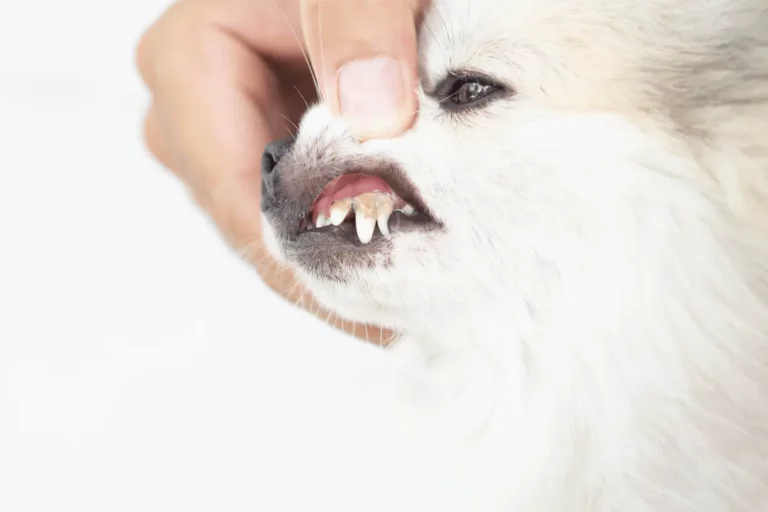
Veterinarian examining the dog's mouth: tartar deposits (yellowish-brown) can be seen at the base of the teeth.
- Bad breath (halitosis): this is usually the first symptom to be noticed. The dog's mouth begins to exude a persistent unpleasant smell, popularly called "jaguar breath".
- Yellow or brown teeth: a dog tooth with tartar often has yellowish/brown spots or crusts adhered to it, especially near the gum line.
- Inflamed gums (gingivitis): the build-up of plaque and tartar irritates the gums. They can become red, swollen and even bleed slightly during chewing or when the dog chews on hard toys.
- Discomfort when chewing: in the early stages the dog usually continues to eat normally, but as the problem worsens, the pet may feel pain when chewing hard food. You may notice that the dog avoids hard toys that it used to chew on, or prefers wet/pasty food to dry food.
- Excessive salivation and difficulty swallowing: gum ulcers or infections can cause dogs to drool more than usual and have difficulty swallowing larger foods.
- Weak or moving teeth: in very severe cases, tartar and periodontal infection destroy the support of the teeth so much that they can become soft or fall out spontaneously.
Risks and consequences of tartar for dogs
Some people think that tartar is just a cosmetic issue or bad breath, but the effects actually go much further than that. Tartar is an indicator of ongoing periodontal disease - a chronic infection in the mouth - which can lead to various complications.
Firstly, tartar irritates and inflames the gums (gingivitis). If not removed, the inflammation progresses to periodontitis, which is the infection of the supporting tissues of the teeth (periodontal ligament and bone).
This chronic infection destroys the bone and ligament that hold the tooth together. Over time, the teeth become loose and may fall out or need to be extracted.
Periodontal inflammation is painful. Imagine an infection in your tooth - it hurts to chew or even move your mouth.
Severe infections can occur in the mouth (abscesses). In advanced cases, bacteria can form dental abscesses (pockets of pus) which cause facial swelling and can drain secretion near the dog's muzzle or eye.
Untreated tartar can also result in bacteria in the bloodstream (bacteremia). A mouth with periodontal disease constantly releases bacteria into the animal's bloodstream. These bacteria can spread through the body via the blood (a process called bacteremia).
The heart, kidneys and liver are particularly vulnerable. Bacteria from the mouth can become lodged in the heart valves, causing bacterial endocarditis (infection of the heart valves).
They can also aggravate existing heart problems.
In the kidneys and liver, the microorganisms and toxins released by periodontal infection contribute to inflammation and damage in these organs.
A veterinary study found a significant association between periodontal disease in dogs and heart disease, indicating that dogs with a lot of tartar and gum infection are more likely to develop heart problems.
Why professional cleaning is necessary
Well, once tartar has settled on the dog's teeth, it can't be removed with brushing or home methods.
This tartar sticks firmly to the teeth and can extend below the gums.
The only safe and effective way to eliminate it is with a professional cleaning by a veterinarian, called a tartarectomy or dental prophylaxis.
Remember that the decision to clean is made by a veterinary professional and should not be carried out without their advice. Don't do it at home. This text is for information purposes only.
How tartar cleaning works
During the procedure, the dog is anaesthetized to ensure immobility and freedom from pain.
With the animal sedated, the vet uses dental ultrasound equipment to break up and remove the tartar deposits.
Hand instruments are also used to reach hard-to-reach areas. At the end, the teeth are polished to make it more difficult for new plaque to form.
The importance of anesthesia
Anesthesia is essential in this process because the dog cannot keep its mouth open for long periods.
Pre-operative examinations are necessary to ensure that the animal is healthy and can be anaesthetized safely.
In general, inhalation anesthesia is used, which is considered safer. A veterinary anesthesiologist monitors the dog throughout the procedure.
What is done during tartarectomy
First, the vet assesses all the teeth. If the clinic is equipped, dental x-rays can be taken.
The tartar is then removed using ultrasound, tooth by tooth. Severely damaged teeth can be extracted.
Finally, the teeth are polished and fluoride or dental gel can be applied for protection. The whole procedure takes between 40 minutes and 1 hour.
Care after cleaning
Recovery is usually quick. The dog can go home the same day, and in the case of tooth extractions, it may be necessary to offer paste food for a few days.
If there is an infection, the vet may prescribe antibiotics or painkillers. Bad breath usually disappears and the owner notices a visible improvement in the dog's well-being.
Can I remove tartar at home?
No. No homemade solution will remove hardened tartar. Scraping the teeth yourself can hurt the dog or cause damage to the teeth and gums. The only effective method is cleaning by qualified professionals.
Are there any risks in the procedure?
Every procedure with anesthesia has some risk, but with prior examinations and proper monitoring, tartarectomy is considered safe. The benefits outweigh the risks: eliminating infections, ending pain and improving the dog's quality of life. Fear of anesthesia should not prevent treatment.
Can tartar come back?
Yes, if care is not maintained at home. In dogs prone to plaque build-up, tartar can return in 6 to 12 months. Daily brushing and regular visits to the vet are essential to prevent a return.
At what age do dogs lose their teeth?
There is no fixed age for tooth loss in dogs, but this problem tends to appear more frequently from the age of 7 or 8, when the dog enters the senior phase.
However, tooth loss doesn't just happen as a result of natural ageing - it's usually the result of problems accumulated over a lifetime, such as tartar, gingivitis and periodontal disease.
Dogs who have not had proper oral hygiene, proper nutrition or veterinary care tend to develop these problems earlier, leading to tooth loss even in middle age.
Therefore, the age at which a dog begins to lose teeth depends more on lifelong care than on time itself.