Hypothyroidism in dogs occurs when the thyroid gland is not producing enough hormones, mainly T3 and T4. This disease, which is also common in humans, is common in dogs, especially in breeds with a predisposition to the disease, such as the Golden Retriever, Doberman, Standard Pinscher, Tibetan Terrier, Boxer and Alaskan Malamute.
If you suspect that your dog may have hypothyroidism, take him to the vet as soon as possible. If not treated in good time, the dog could fall into a myxedematous coma - an emergency that causes hypothermia, low blood pressure and can be fatal.
What are the symptoms of hypothyroidism in dogs?
Hypothyroidism is a hormonal problem that affects many dogs, especially middle-aged to elderly dogs. It happens when the thyroid, a gland located in the neck, produces fewer hormones than necessary. These hormones are responsible for controlling the body's metabolism.
The most common symptoms are
Tiredness and apathy
The dog becomes quieter, sleeps a lot and loses interest in playing and going for walks.
Gaining weight without eating more
Even eating the same amount, the dog puts on weight easily.
Cold intolerance
Pets feel colder than usual and look for warm places.
Skin and hair problems
Hair loss (especially on the sides of the body and on the tail), drier and more brittle hair, dark or oily-looking skin, and frequent skin infections.

Neurological changes (rarer)
Some dogs may have weakness in their legs, drag their paws or even have seizures.
If your dog has several of these symptoms, it's best to see a vet.
Breeds with a higher risk of hypothyroidism
O hipotireoidismo é mais comum em cães de porte médio a grande, mas algumas raças têm predisposição genética à doença.
Ver raças predispostas
Studies confirm that these breeds have an above-average risk, while small dogs (such as the Pug, French Bulldog and Yorkshire Terrier) and SRDs (mongrels) are less affected.
Causes of hypothyroidism in dogs
Hypothyroidism can have different causes, but in more than 90% of cases, the problem lies with the thyroid gland itself (called primary hypothyroidism).
The main causes are
- Autoimmune disease
The dog's own immune system attacks the thyroid, destroying its cells.
- Thyroid degeneration
The gland gradually shrinks and loses its ability to produce hormones.
In rarer cases, the problem may come from another region of the brain (the pituitary gland), which is what "gives the command" for the thyroid to work (secondary hypothyroidism).
Research has shown that the risk of hypothyroidism in dogs increases with age, with dogs aged 11 to 13 having a 4.54 times greater risk of hypothyroidism than dogs aged 5 to 7. Furthermore, this risk increases as the body weight of these dogs increases.
How does the vet diagnose hypothyroidism?
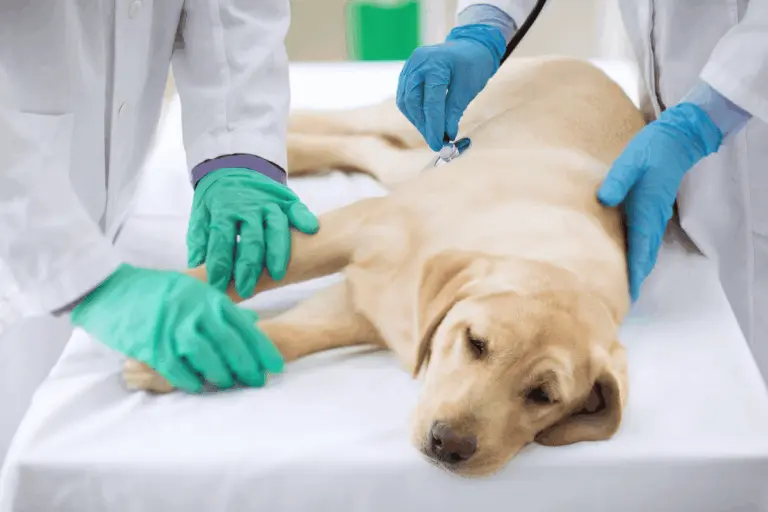
Diagnosis is based on symptoms and specific blood tests. The main tests are
- Total T4: Measures the amount of thyroid hormone in the blood.
- TSH: Checks whether the body is trying to stimulate the thyroid to produce more hormone.
- Free T4: More precise test, used in cases of doubt.
- Antibodies against the thyroid: To find out if the cause is autoimmune.
The vet may also order additional tests, such as a blood count and cholesterol profile.
How to treat hypothyroidism in dogs?
The treatment is simple and usually brings great results. It consists of giving the dog a synthetic hormone called levothyroxine, which replaces what the thyroid has stopped producing.
What is the medication like?
Levothyroxine is given orally, usually twice a day, for the rest of your life.
When will the results appear?
The first signs of improvement appear after 2 to 4 weeks of treatment. The dog regains energy, appetite and mood improve, and hair begins to grow back in a few weeks.
The vet will carry out regular check-ups to adjust the dose and ensure that the treatment is working.
Is hypothyroidism in dogs curable?
Hypothyroidism has no definitive cure, but with the right treatment, the dog can lead a completely normal and healthy life. You just need to take the medication correctly and follow up with the vets.
Stopping treatment can cause symptoms to return, so it's important to maintain care throughout your life.
What is Cushing's Syndrome in dogs? (And how to differentiate it from hypothyroidism)
Cushing's Syndrome, also called hyperadrenocorticism, is a hormonal disease that affects the production of cortisol, known as the "stress hormone". While hypothyroidism occurs due to a lack of thyroid hormones, Cushing's is caused by an excess of cortisol in the body.
This excess can occur for two main reasons: the most common is a problem in the pituitary gland, a gland in the brain that begins to overstimulate the adrenal glands.
The other possibility, which is less common, is the presence of a tumor in the adrenals themselves, which causes them to overproduce cortisol on their own.
The symptoms of Cushing's also affect dogs' metabolism and skin, but in a very different way to hypothyroidism.
Dogs with Cushing's tend to be very thirsty and urinate a lot, often to the point where they can't hold it in. It's also common for the animal to be exaggeratedly hungry, becoming obsessed with food. Another typical sign is a swollen and flabby belly, called a pendulous abdomen, which occurs due to muscle weakness and fat accumulation in the abdominal region.
In terms of skin and coat, dogs with Cushing's tend to have generalized hair loss, thinner and more fragile skin (it bruises easily) and a greater predisposition to skin infections. It is common for owners to notice that their dog is panting even when at rest, due to the effects of cortisol on the respiratory system.
Because they are hormonal diseases that affect the skin and weight, Cushing's and hypothyroidism can often be confused.
But in general, a dog with hypothyroidism is sluggish and gains weight "without eating more", while a dog with Cushing's is agitated, eats a lot, drinks a lot of water and urinates a lot. In addition, a distended abdomen and thin skin are more typical features of Cushing's.
The correct diagnosis can only be made by a veterinarian through specific hormone tests.
Therefore, if your dog shows symptoms like these, it is essential to seek professional help to find out the exact cause and start the appropriate treatment.