We all want to know how to calculate a dog's age and how many human years our beloved pets have. After all, they are part of our family's daily routine and time passes too quickly; suddenly they are like old people, dependent on extra care and lacking in energy.
Understanding how dogs age is extremely important if we want to take proper care of our pets. It helps us to be aware of their needs at each stage of life and also to prevent the decline in health and quality of life that is characteristic of ageing.
That's why PetMoreTime has consulted several sources to bring you a practical formula for calculating a dog's age.
How can you tell a dog's age from its human age?
You're probably wondering, "But wait a minute, I always heard that a dog's age was multiplied by seven!"
Yes, it's true that this way of calculating a dog's age has been used for a long time, in Brazil and around the world, to understand the aging stage of a puppy.
According to the American Kennel Club, one possible explanation for the use of this formula was that, in the past, people lived for around 70 years and dogs for around 10. Nowadays, thanks to the increase in life expectancy (both human and canine), this figure is quite different: a person can reach 100 years or more, while a dog, depending on the breed and size, can exceed 15 years.
Another assumption was that it was a marketing strategy, says William Fortney, a veterinarian at Kansas State University. The aim, he says, was to educate the public about how dogs age much faster than humans, and thus take them to the vet more often.
How to calculate a puppy's age
The American Veterinary Medical Association (AVMA) provides the following general guidelines for calculating a dog's age in human years:
- 15 human years are equivalent to the first year of a medium-sized dog's life.
- A dog's second year is equivalent to about nine years for a human.
- After that, each human year would be approximately five years for a dog.
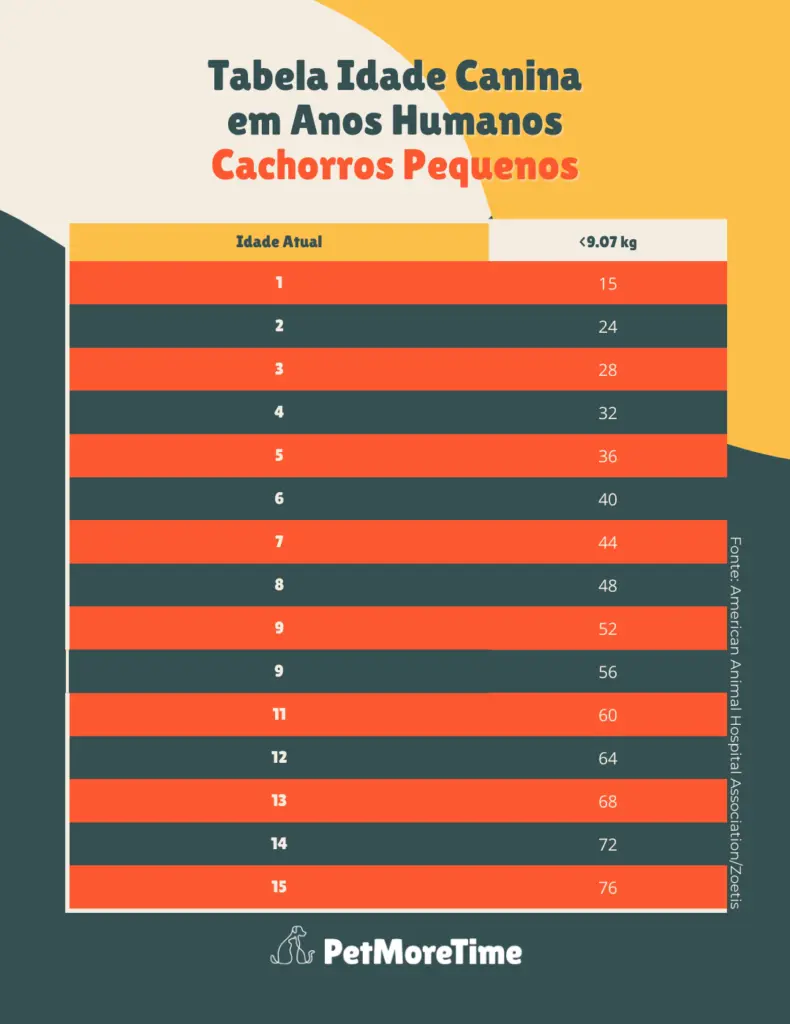
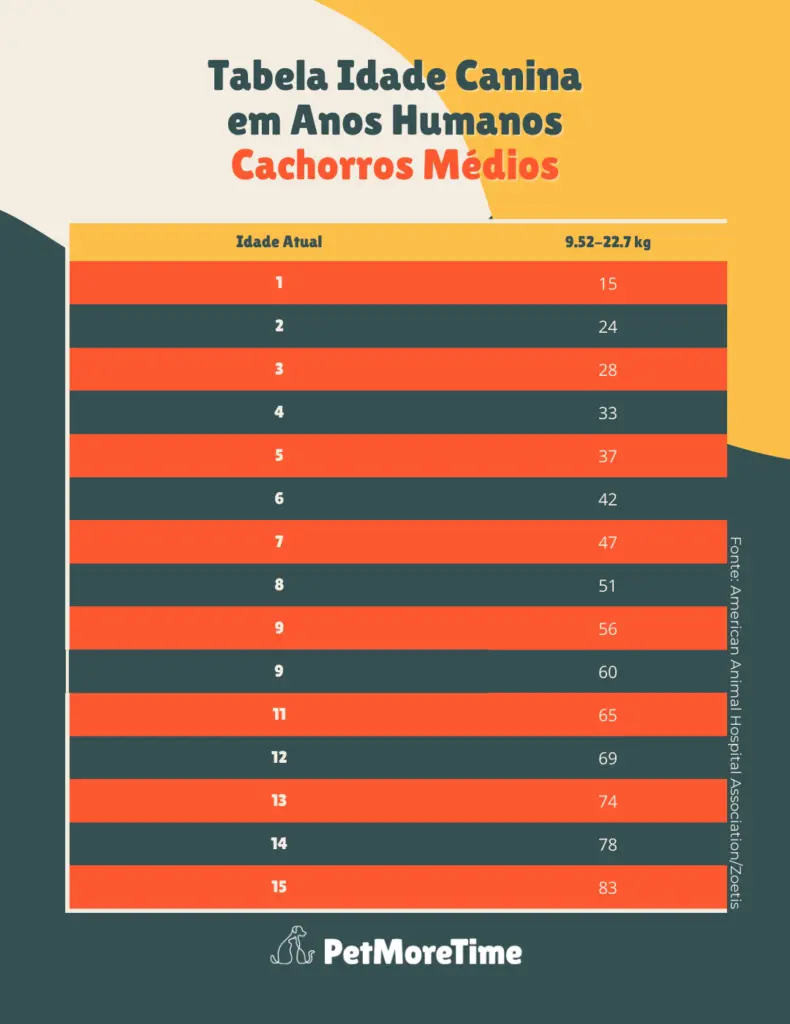
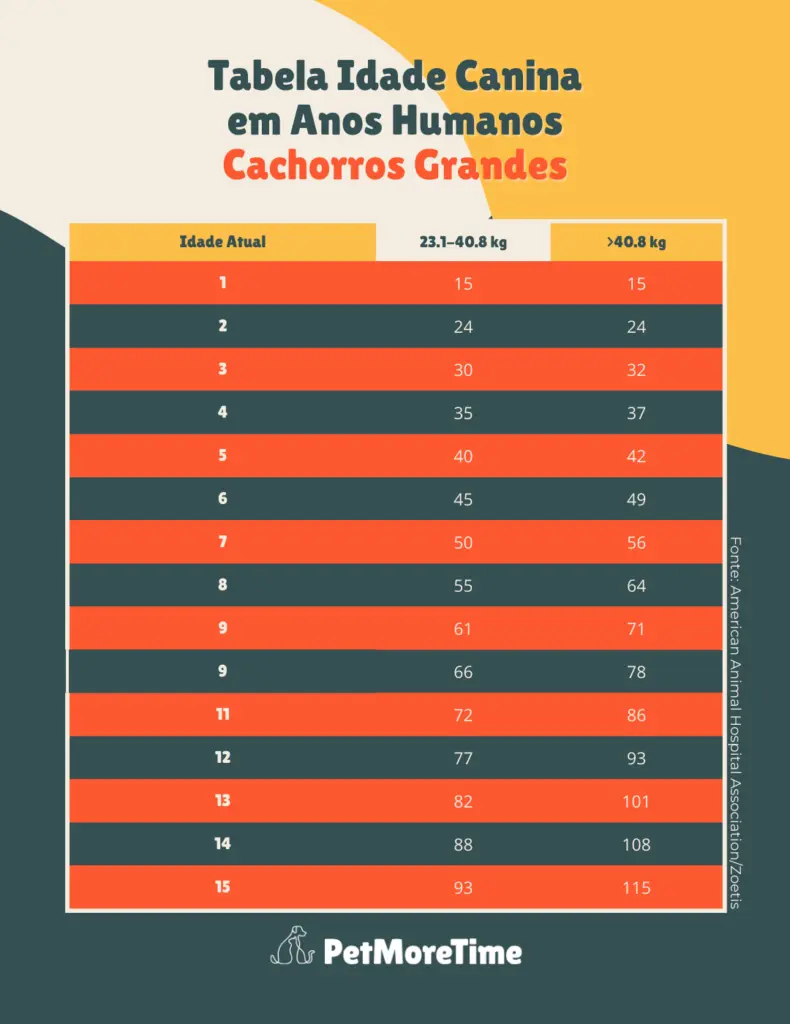
In addition, the American Animal Hospital Association (AAHA) shared a document from Zoetis that determines the physiological age of your pet. We've summarized the information below:
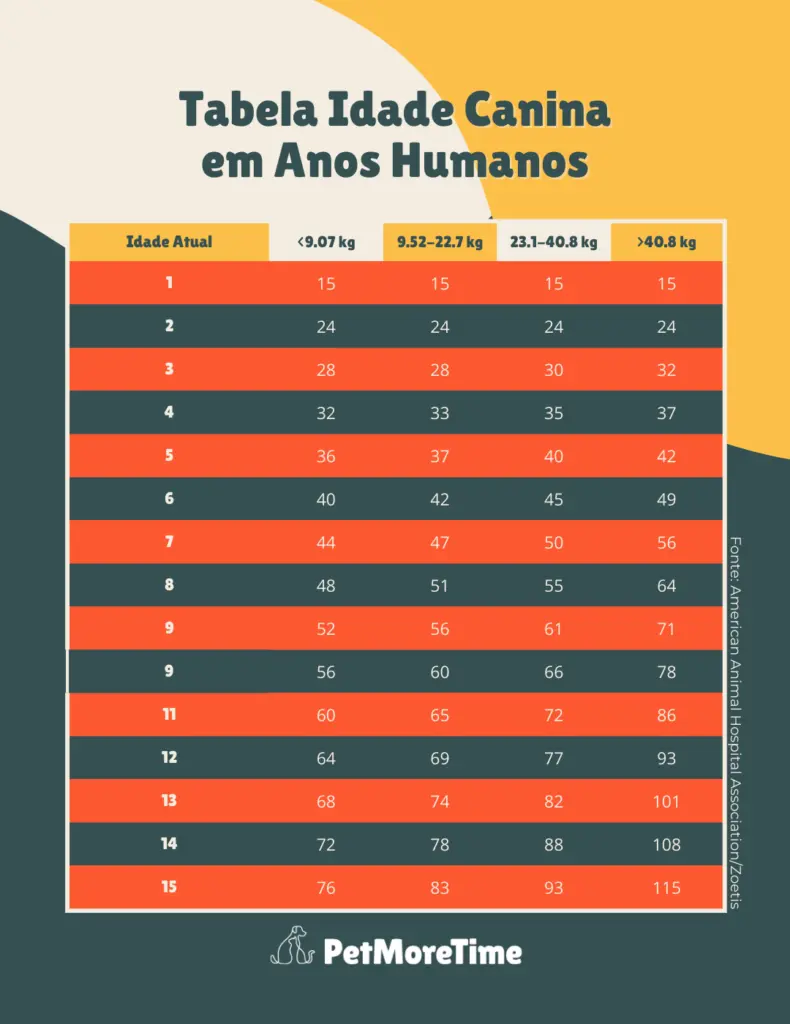
Cats and small dogs are generally considered "old" at the age of ten.
And dogs of larger breeds tend to have a shorter life expectancy compared to smaller breeds, and can be considered elderly at 5 or 6 years of age.
We talk about the average lifespan of dogs on our blog.
Small dogs
Medium dogs
Large dogs
How to calculate a dog's age using logarithms
Another 2019 study by researchers at the University of California San Diego presented a new method for calculating the age of dogs, based on changes made to human and canine DNA over time.
The results allowed them to derive a formula to adjust the dogs' ages to "human years" by multiplying the natural logarithm of the dog's age by 16 and adding 31 (human_age = 16ln(dog_age) + 31).
This natural logarithm calculation can help you calculate your dog's age in another way.
Let's use the formula to calculate the age of a 5-year-old dog in human years. The formula is:
Equivalent human age=16×ln(chronological age of the dog)+31
Substituting the dog's chronological age (5 years) into the formula, we get:
- Human equivalent age=16×ln(5)+31
By calculating the natural logarithm of 5 (approximately 1.61) and substituting it into the formula, we have:
- Human equivalent age=16×1.61+31
Finally, by multiplying and adding, we get:
Human equivalent age≈57
Therefore, a 5-year-old dog would have the equivalent of 57 human years, according to this formula. Remember that this is only an estimate and can vary depending on various factors, including the breed and size of the dog.
To make things easier, see below for a table showing the natural logarithm of each age and the corresponding human age:
Dog age with the natural logarithm
| Dog age | Natural logarithm | Human age |
| 1 | 0.0000 | 31 |
| 2 | 0.6931 | 42.1 |
| 3 | 1.0986 | 48.6 |
| 4 | 1.3863 | 53.2 |
| 5 | 1.6094 | 56.8 |
| 6 | 1.7918 | 59.7 |
| 7 | 1.9459 | 62.1 |
| 8 | 2.0794 | 64.3 |
| 9 | 2.1972 | 66.2 |
| 10 | 2.3026 | 67.8 |
| 11 | 2.3979 | 69.4 |
| 12 | 2.4849 | 70.8 |
| 13 | 2.5649 | 72 |
| 14 | 2.6391 | 73.2 |
| 15 | 2.7081 | 74.3 |
Source: Purina

How do you know your dog's stage of life?
Identifying your puppy's stage of life is essential to providing the right care at each stage.
The classification generally follows three main stages: puppy, adult and elderly.
These periods can vary according to the size and breed of the dog. For example:
- Puppies: until around 12 months (or longer for large breeds, which mature more slowly). During this phase, the focus is on growth, learning and socialization.
- Adults: between 1 and 7 years, depending on size. This is the period of greatest vigor and energy, with specific nutritional and exercise needs.
- Elderly: from the age of 7 in small or medium breeds, and from the age of 5 or 6 in large breeds. This stage requires special attention to prevent disease and promote quality of life.
Knowing the stage of life helps to adjust feeding, veterinary care and physical activities, ensuring your dog's well-being.
Common signs of ageing in dogs
As dogs get older, various physical and behavioral signs begin to manifest themselves, indicating the progression of age. These signs are crucial to understanding the changes your pet is going through and adjusting their care accordingly.
One of the most striking indicators of a dog's age is its teeth.
As experts explain, by the age of seven months, all of a dog's permanent teeth should have grown in. Between one and two years old, these teeth start to become duller and may show a slight yellowing.
Between the ages of five and ten, teeth show signs of wear and possibly dental disease.
Other indicators of a dog's ageing, especially as they reach their mature years, include:
- Gray hair: Just like humans, dogs can also start to show gray hair, especially around the muzzle and face.
- Compromised vision: Blurred eyes or difficulty seeing are common. Visible mist in the eyes is often a sign of cataracts.
- Hearing difficulties: Hearing loss can be gradual, and you may notice that your dog doesn't respond as readily to commands or sounds.
- Muscle and joint stiffness: Arthritis is prevalent in older dogs, causing pain and difficulty moving.
- Reduced activity level: Older dogs tend to be less active, preferring to rest more than to participate in intense play or exercise.
- Behavioral changes: This can include increased anxiety, confusion, accidents in the house, irritability, among other altered behaviors.
How to look after an elderly dog
We know that in the first few months of life, dogs grow very quickly. The senior phase brings with it a slower pace and the need for adaptations in daily care.
Here are some important tips to ensure that your canine friend enjoys his golden years in comfort and health:
- Dietary adjustments: As dogs get older, their nutritional needs change. Food formulated for senior dogs can help maintain a healthy weight, support joints and improve digestibility. Consult a veterinary nutritionist to adjust the diet according to your dog's specific health needs.
- Health care: Regular visits to specialized vets (such as cardiologists, nephrologists, orthopedists, among others) are crucial to monitor and treat common conditions in elderly dogs, such as heart disease, arthritis or kidney problems. Vaccinations and parasite control remain important and should be adapted to the animal's health condition.
- Moderate exercise: Physical activity is still important for maintaining your dog's physical and mental health. Adapt activities to your dog's capabilities, opting for shorter, gentler walks, and avoid intense exercise that could overload their joints.
- Stimulation: Older dogs can also suffer from cognitive decline. Keep their minds active with puzzle games, mental stimulation toys and regular social interaction to help maintain their cognitive function.
- Monitoring vision and hearing: Many dogs develop vision or hearing problems as they get older. Pay attention to how your dog responds to commands and adapt your form of communication to ensure that he feels safe and understood.
Got it?
As we've said, calculating a dog's age for a human is much more complex than the 7:1 scale. So we hope we've helped you learn how to calculate a dog's age!
How can PetMoreTime help canine longevity?
PetMoreTime combines science and technology to offer innovative solutions that promote the health and longevity of dogs. Through the personalized protocol, the process includes:
- Precise diagnosis: a detailed assessment of the dog's state of health, including epigenetic analysis to understand ageing at a molecular level.
- Personalized formulas: supplements developed to meet the specific needs of each pet, based on the data collected.
- Continuous monitoring: smart collars that track health and activity patterns, sending information directly to owners and vets.
With PetMoreTime, you have access to advanced care that improves your canine friend's life, allowing them to enjoy more healthy years by your side.