Finding a lump on an elderly dog's belly or other part of the body often causes immediate fear. Often, the owner notices it while petting the animal, bathing it, or picking it up, and the first question that comes to mind is almost automatically: is it serious?
The good news is that not every lump in an older dog is cancer. The bad news is that, at this stage of life, any new change deserves attention.
Aging increases the chance of both benign changes and diseases that require diagnosis and monitoring.
What is a lump on an elderly dog?
"Lump" is a generic term used to describe any mass, nodule, or swelling that can be felt.
It can be located on the skin, just below it, or even deeper, involving muscles or internal organs.
In older dogs, these nodules can appear for different reasons: benign changes due to aging, inflammation, infections, reactions of the body, or tumors. The external appearance alone is rarely sufficient to determine what is happening.
What are the symptoms associated with nodules in older dogs?
Many nodules do not cause pain or symptoms at first, which means they can go unnoticed for weeks or months.
In other cases, the guardian may notice sensitivity to touch, progressive increase in volume, behavioral changes, apathy, or discomfort when moving.
When the lump is associated with infection and inflammation, signs such as local heat, redness, and pain may appear.
Therefore, the absence of symptoms does not mean that the lump should not be investigated.

Types of "lumps" in older dogs
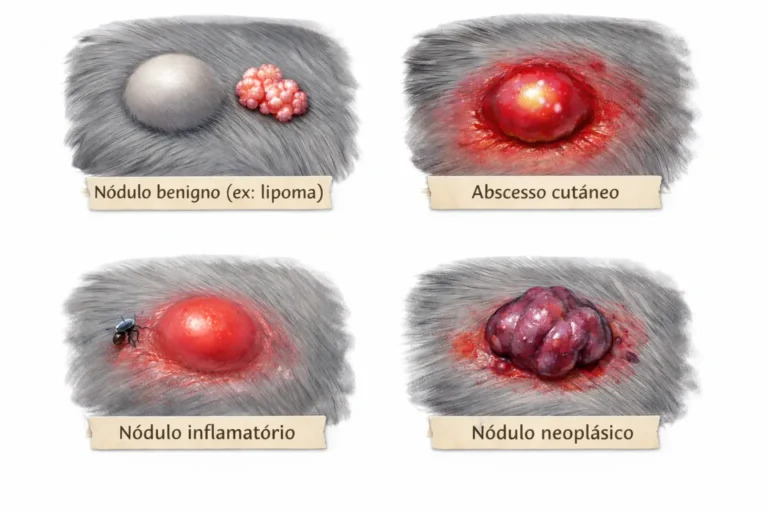
Types of nodules
There are different types of changes that can manifest as lumps in older dogs. Understanding the groups helps reduce anxiety, but it does not replace a veterinary diagnosis.
Benign nodules
They are quite common in older dogs. The best-known example is lipoma, an accumulation of fat under the skin, usually soft and painless. Dog warts and sebaceous adenomas also fall into this group.
Canine papillomatosis, caused by a virus, can cause warts, mainly in areas such as the mouth, face, and occasionally on the body. In older dogs, these lesions may take longer to regress.
Although benign, these nodules should be monitored, especially if they grow or change in appearance.
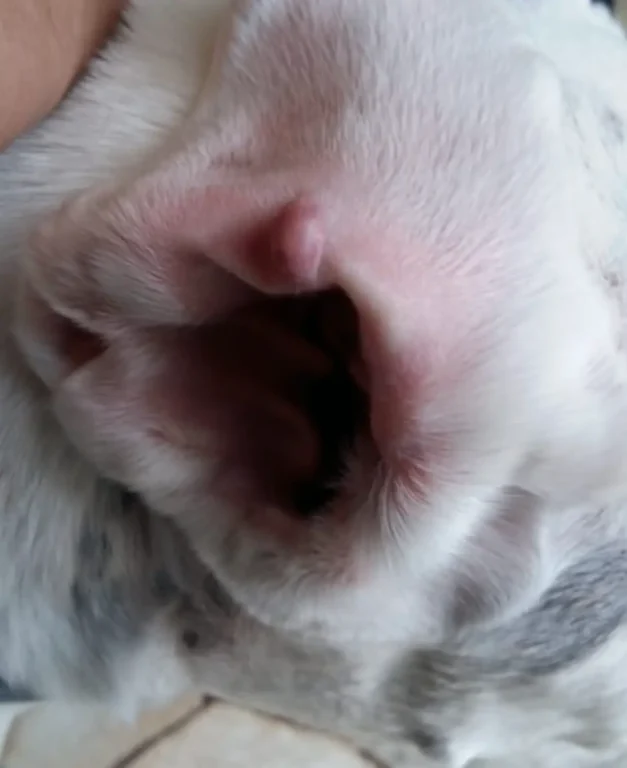
Non-pigmented nodule (mast cell tumor) on a dog's ear
Abscess in dogs
An abscess is a collection of pus caused by infection. It usually develops quickly, can be painful, feel warm to the touch, and increase in size within a few days.
In older dogs, abscesses can develop after minor injuries, bites, or even dental problems that spread bacteria. Unlike tumors, abscesses usually cause obvious discomfort.
Inflammatory or reactive nodules
Some nodules appear as the body's response to trauma, insect bites, injections, or local inflammatory processes. They may diminish over time, but need to be monitored to ensure that they are actually regressing.
Tumor nodules
Tumors can be benign or malignant. In older dogs, the chance of tumors developing increases, but this does not mean that every tumor is malignant cancer.
The challenge is that, visually, many tumors resemble simple lesions. Therefore, investigation is always recommended.
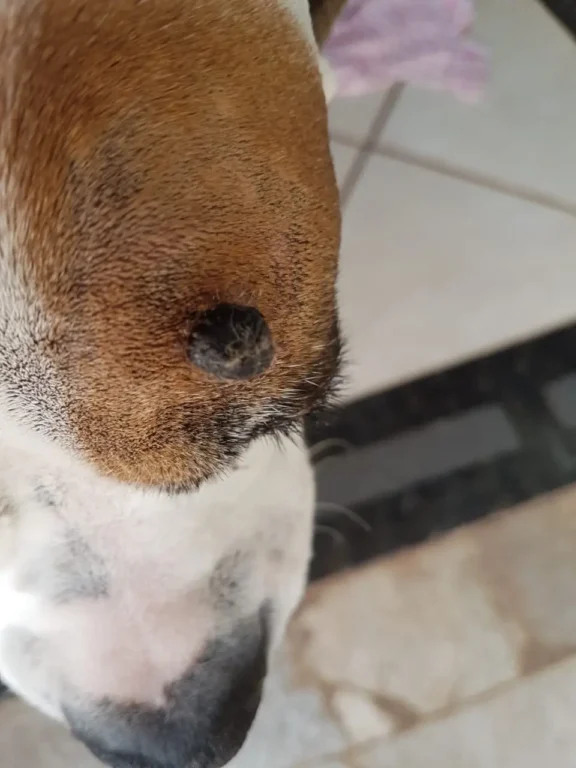
Pigmented tumor nodule (another aspect of mast cell tumor) in a Boxer dog
What does a cancerous lump look like in dogs?
There is no single standard that defines a cancerous lump. Some are hard, others soft. Some grow quickly, others develop slowly.
In general, nodules that increase in size over time, do not move under the skin, have irregular edges, or alter the surrounding skin raise greater suspicion. Even so, only tests can confirm the nature of the lesion.
What could be a "hard lump" in my dog's belly?
A hard lump on an older dog's belly can have different causes. Tumors, encapsulated abscesses, chronic inflammation, or even internal masses can have this consistency.
Texture helps in clinical evaluation, but does not allow for definitive conclusions. A hard lump is not automatically synonymous with cancer, just as a soft lump does not rule out more serious diseases.
When is a lump cause for concern?
Some signs indicate that the lump should be evaluated as soon as possible:
- Rapid or continuous growth
- Pain when touched
- Change in skin color or appearance
- Ulceration or bleeding
- Progressive hardening
- Change in dog behavior
In older dogs, the general recommendation is: any new lump warrants evaluation, even in the absence of these signs.
Lumps in other areas of the dog's body
In addition to the abdomen, it is common to find nodules in other areas.
Lump on dog's neck
It may be related to enlarged lymph nodes, infections, tumors, or benign skin changes. Its location near important structures makes evaluation even more necessary.
Lump on a dog's paw
It can arise from trauma, inflammation, cysts, or tumors. In paws, discomfort is usually more evident, affecting mobility.
Diagnosis: how to know what the lump is?
It is not possible to identify the nature of a lump just by looking at it or feeling it at home.
The diagnosis involves clinical veterinary evaluation and, when indicated, tests such as aspiration, biopsy, or imaging.
In older dogs, early investigation helps to define simpler and safer behaviors.
Treatments for lumps in older dogs
Treatment depends entirely on the cause. Some nodules only need monitoring. Others require medication, drainage, or surgical removal.
In cases of tumors, the approach varies depending on the type, stage, and overall health of the dog. Individualized treatment is essential.
What to do and what not to do when you find a lump on your dog
When you notice a lump, it is best to observe its size, consistency, and evolution, and seek veterinary advice.
You should not squeeze, pierce, cut, or apply homemade substances. These actions can cause infection, pain, and worsen the condition.
How PetMoreTime can help
The appearance of "lumps" in older dogs is often linked to natural changes associated with aging, such as immune changes, chronic inflammation, and an increased risk of skin and tumor diseases.
PetMoreTime continuously monitors your dog's aging process, helping to identify early signs of changes that often go unnoticed in everyday life.
With science-based monitoring, it is possible to act earlier and make safer decisions with your veterinarian.