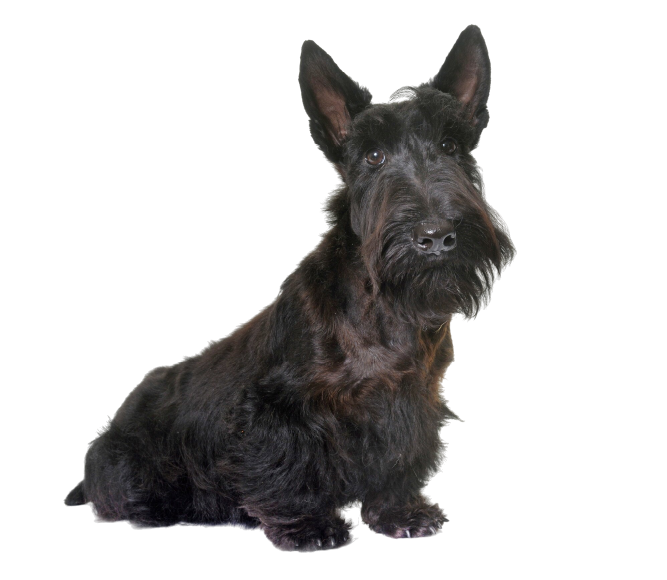
Scottish Terrier: Life Expectancy and How to Extend Their Lifespan

The Scottish Terrier, or “Scottie,” is the little tank of the dog world.

With his unmistakable silhouette and nicknamed “Diehard” for his unwavering bravery in the Scottish Highlands, he is a dog of almost aristocratic dignity.

Independent, determined, and deeply loyal to his family, the Scottie isn’t the kind of dog that begs for attention; rather, he’s a steadfast companion who commands respect wherever he goes with his short legs and impressive beard.

Characteristics of the Scottish Terrier

🐕 Size: Small
🐕 Average weight: 8.5 kg to 10.5 kg
🐕 Height: 25 cm to 28 cm at the withers
🐕 Genetic predispositions: Scottie Cramp, von Willebrand disease, and urinary sensitivity
🐕 Body structure: Stocky, with a heavy bone structure and muscular build, a long head, and erect ears
🐕 Coat: Double coat, with a dense undercoat and a hard, wiry, weather-resistant outer coat; usually black, wheaten, or brindle

How long does a Scottish Terrier live?

Scottish Terrier

The average life expectancy of a Scottish Terrier ranges from 12 to 15 years.

Because it is a hardy dog with a sturdy build, it tends to age in relatively good health, but its longevity is closely tied to preventive screening for tumors, to which the breed has a statistically higher predisposition.

In addition, because they have a heavy build for their size, joint health and weight management are essential.

A lean, active Scottie is significantly more likely to live past the age of 14 with a good quality of life and independence.

Scottish Terrier

Check your dog's aging curve

Want to know how to improve your dog's quality of life as they age?

PetMoretime specializes in veterinary gerontology and offers a personalized longevity program for your dog.

WhatsApp

Common Health Issues in Scottish Terriers

Health Issues Associated with Aging in the Scottish Terrier

Signs of Aging in the Scottish Terrier

Scottish Terrier
Graying of the beard and eyebrows: Gray hairs become very noticeable on the Scottie’s dark face as it enters its senior years.
Reluctance to climb stairs or jump: Osteoarthritis can affect the breed’s short, powerful joints, causing morning stiffness.
Cloudy or opaque eyes: The development of age-related cataracts impairs vision, causing the dog to hesitate in low-light environments.
Appearance of new lumps under the skin: Given the risk of cancer, any "lump" should be examined immediately by a healthcare professional.
Disorientation or staring into space: Symptoms of canine Alzheimer’s (cognitive dysfunction), affecting the recognition of routines.
Ignoring calls or commands: Progressive hearing loss is common and can be mistaken for the breed’s characteristic stubbornness.

Most of these diseases begin silently.

PetMoretime can track and prevent diseases before they appear through continuous monitoring.

WhatsApp

Behavior of the Scottish Terrier

Sociability
Trainability
Energy level
Motivation for food

Lifetime cost

In addition to the initial investment, it is important to consider:

Quality food
Veterinary consultations
Vaccinations and tests
Possible orthopedic or cardiac treatments

How to Increase the Life Expectancy of a Scottish Terrier

To increase the Scottish Terrier’s life expectancy, strict weight control is essential to avoid putting excessive strain on its short joints and to prevent osteoarthritis.

Semi-annual check-ups focusing on abdominal palpation and imaging tests are vital for the early detection of tumors, given the breed’s predisposition.

Monitoring thyroid hormone levels helps prevent complications of hypothyroidism, such as lethargy and skin problems.

Establishing a regular oral hygiene routine helps prevent chronic bacterial infections. In addition, keeping your Scottie’s mind active with scent games and mental challenges is the best strategy for slowing the onset of canine Alzheimer’s and preserving their independent and sharp personality for many years to come.

dogs

Longevity does not depend solely on genetics.

It can be monitored.

Learn how PetMoreTime monitors markers that indicate accelerated aging.

WhatsApp