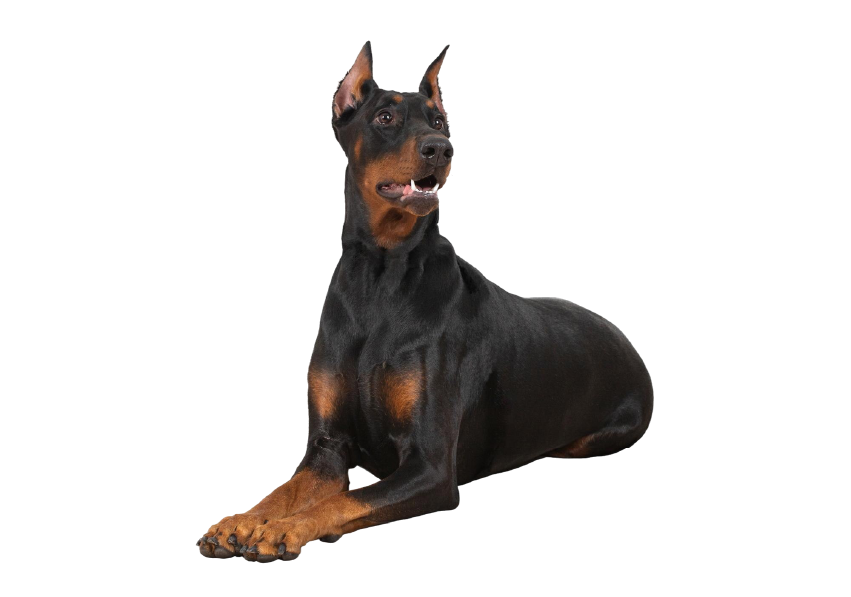
Doberman: Life Expectancy and How to Extend Their Lifespan

The Doberman is a breed of German origin, developed to be the ideal guard dog. Combining elegance, strength, and exceptional intelligence, it stands out for its unwavering loyalty to its owners and for its athletic build, which requires constant physical and mental stimulation to maintain balance.

Characteristics of the Doberman

🐕 Size: Large
🐕 Average weight: 32 kg to 45 kg
🐕 Height: 63 cm to 72 cm at the withers
🐕 Genetic predispositions: Cardiomyopathies, coagulation disorders, and cervical problems
🐕 Body structure: Muscular, powerful, and compact, with elegant lines and an imposing stance
🐕 Coat: Short, coarse, dense, and smooth, with no undercoat

How long does a Doberman live?

Doberman

The average life expectancy of a Doberman ranges from 10 to 13 years.

Because this is a large, athletic breed, longevity is intrinsically linked to heart health.

The breed's cardiovascular response is a critical factor, and the prevention of degenerative heart diseases is the key to extending its lifespan.

Close clinical monitoring, combined with management of physical and nutritional stress, is crucial for the animal to maintain its vitality during its senior years.

Doberman

Check your dog's aging curve

Want to know how to improve your dog's quality of life as they age?

PetMoretime specializes in veterinary gerontology and offers a personalized longevity program for your dog.

WhatsApp

Age-related diseases in Dobermans

Signs of Aging in Dobermans

Doberman
Sudden exercise intolerance: Excessive fatigue or episodes of fainting may indicate worsening dilated cardiomyopathy (DCM).
Lack of coordination or weakness in the hind legs: The animal may have difficulty maintaining balance, indicating neurological problems or spinal degeneration.
Graying of the muzzle: The appearance of white hairs on the face and around the eyes is a clear visual sign of old age.
Difficulty standing up or lying down: Joint stiffness caused by osteoarthritis makes these movements slower and more uncomfortable.
Weight gain and lethargy: A slowed metabolism may be associated with hypothyroidism, which is common in older dogs of this breed.
Prolonged bleeding: Due to von Willebrand disease, minor cuts or bleeding gums may take longer to stop in old age.

Most of these diseases begin silently.

PetMoretime can track and prevent diseases before they appear through continuous monitoring.

WhatsApp

Doberman Behavior

Sociability
Trainability
Energy level
Motivation for food

Lifetime cost

In addition to the initial investment, it is important to consider:

Quality food
Veterinary consultations
Vaccinations and tests
Possible orthopedic or cardiac treatments

How to Increase a Doberman's Life Expectancy

To increase the life expectancy of Dobermans, annual echocardiograms and electrocardiograms are essential for the early detection of CMD.

Monitoring thyroid hormone levels and managing coagulation (Von Willebrand) should be part of a regular health care regimen.

Maintaining a healthy weight is crucial for protecting your spine and joints from osteoarthritis.

In addition, following a high-quality diet and engaging in balanced physical exercise helps preserve muscle mass and metabolic function, ensuring that you age with dignity and vitality.

dogs

Longevity does not depend solely on genetics.

It can be monitored.

Learn how PetMoreTime monitors markers that indicate accelerated aging.

WhatsApp