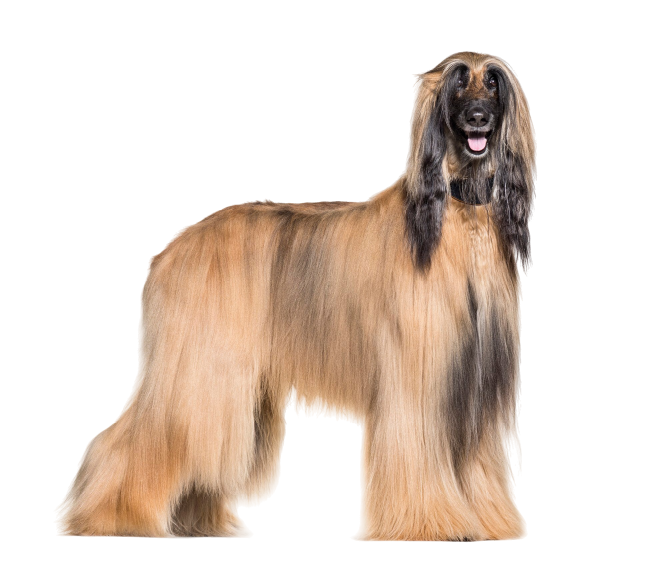
Afghan Hound: Life Expectancy and How to Extend Their Lifespan

The Afghan Hound is often described as the “king of dogs” due to its aristocratic appearance and majestic bearing. Native to the mountains of Afghanistan, this sighthound is famous for its long, silky coat, enigmatic eyes, and an independent, almost feline personality that combines dignity with a touch of eccentricity.

Characteristics of the Afghan Hound

🐕 Size: Large
🐕 Average weight: 20 kg to 27 kg
🐕 Height: 61 cm to 73 cm at the withers
🐕 Genetic predispositions: Pneumothorax, sensitivity to anesthesia, and hip dysplasia
🐕 Body structure: Athletic, slender, and powerful, with prominent hip bones and large paws for traction
🐕 Coat: Very long, with a fine, silky texture, requiring rigorous and constant grooming

How long does an Afghan Hound live?

Afghan hound

The average life expectancy of an Afghan Hound ranges from 12 to 14 years.

Although he is a large dog, he lives longer than many breeds of similar size, thanks to his athletic build and low body fat percentage.

However, this characteristic makes it extremely sensitive to toxins and anesthetics.

Maintaining the health of the Afghan Hound requires close monitoring of its endocrine system and skin health, as its thick coat can hide skin problems or early-stage lumps.

The secret to his longevity lies in the balance between vigorous exercise and meticulous preventive care.

Afghan hound

Check your dog's aging curve

Want to know how to improve your dog's quality of life as they age?

PetMoretime specializes in veterinary gerontology and offers a personalized longevity program for your dog.

WhatsApp

Common Health Issues in Afghan Hounds

Signs of Aging in the Afghan Hound

Afghan hound
Changes in coat texture: The coat may become thinner, drier, or more brittle, often reflecting the imbalances associated with hypothyroidism.
Difficulty jumping or running: As a greyhound, any hesitation when running may indicate joint pain caused by osteoarthritis.
Blurred vision and difficulty navigating in dim light: The onset of age-related cataracts affects this visual hunter’s ability to navigate and stay safe.
Disorientation or staring at walls: Signs of canine Alzheimer’s (cognitive dysfunction), which affect their interaction with their owners.
Reduced response to sounds and calls: Progressive hearing loss is common in older adults, making them seem more "distant."
Appearance of lumps during brushing: Because of their long coat, regular palpation is vital for the early detection of tumors.

Most of these diseases begin silently.

PetMoretime can track and prevent diseases before they appear through continuous monitoring.

WhatsApp

Behavior of the Afghan Hound

Sociability
Trainability
Energy level
Motivation for food

Lifetime cost

In addition to the initial investment, it is important to consider:

Quality food
Veterinary consultations
Vaccinations and tests
Possible orthopedic or cardiac treatments

How to Increase the Life Expectancy of an Afghan Hound

To increase the Afghan Hound’s life expectancy, daily brushing is essential—not only for aesthetic reasons, but also to detect dermatitis and tumors early on. Semiannual thyroid monitoring is vital for managing hypothyroidism before it affects the dog’s metabolism. 

Finally, maintaining a safe exercise routine in fenced-in areas promotes cardiovascular health and prevents cognitive decline, while always taking into account the breed’s extreme sensitivity to chemicals and sudden temperature changes.

dogs

Longevity does not depend solely on genetics.

It can be monitored.

Learn how PetMoreTime monitors markers that indicate accelerated aging.

WhatsApp